




In the chemical and materials (steel) industries, which account for approximately 20% of CO2 emissions in our country, almost all raw materials are dependent on fossil resources. The “Advanced Technologies for Lignocellulosic Biomass Utilization Based on Carbonization” module focuses on solid lignocellulosic biomass, a renewable and carbon-neutral resource with vast potential that remains underutilized. It aims to develop a novel conversion technology that enables the co-production of key platform chemicals and carbon materials. By optimizing the conditions for carbonization, it is possible to selectively produce compounds such as anhydrous sugars and aromatic compounds, while also manufacturing various carbon materials such as activated carbon, graphite, coke, and carbon fibers. The goal is to develop a technology with productivity and economic viability comparable to traditional industrial processes. This project seeks to integrate and fuse knowledge from diverse fields, including chemical engineering, materials chemistry, catalytic chemistry, and analytical chemistry, with the aim of advancing biomass-based chemical industries and contributing to the creation of a decarbonized society through practical and scalable technologies.
In order to transition mature large-scale industries to a sustainable form, the establishment of systems with productivity comparable to existing technologies is essential for achieving this goal. In the development of technologies aimed at realizing a carbon-neutral society, lignocellulosic biomass stands out as the only viable option to replace fossil resources for the production of chemicals and carbon materials. This research focuses on the development of technologies that co-produce key chemical compounds and carbon materials, using carbonization as the core fast reaction.
Unlike the conventional petrochemical and coal chemical industries, which make thorough use of the fractions produced by carbonization or separation, biomass chemistry, particularly in academic research, often focuses on the production of a single product. In this module, a collaborative team of researchers with expertise in carbonization, but targeting different products, aims to develop a high-throughput reaction system based on the fast reaction for co-producing multiple products without compromising their properties and yields.
KUDO Shinji
Associate Professor
Institute for Materials Chemistry and Engineering
Platform chemicals and coke production
MIYAWAKI Jin
Associate Professor
Institute for Materials Chemistry and Engineering
Activated carbon and coke production
NAKABAYASHI Koji
Associate Professor
Institute for Materials Chemistry and Engineering
Graphite and carbon fiver production
The platform chemical compounds and various carbon materials targeted in this research can cover nearly all products with high potential demand that can be produced from biomass. Co-producing multiple products from lignocellulosic biomass as its advanced utilization technology is expected to yield synergistic effects in all aspects, including cost, conversion efficiency (both energy and material balance), quality, and implementability.

T. N. Rafenomananjara, S. Kudo, J. Sperry, S. Asano and J.-i. Hayashi.
RSC Sustainability, 3 (2025) 1366
DOI:10.1039/d4su00502c
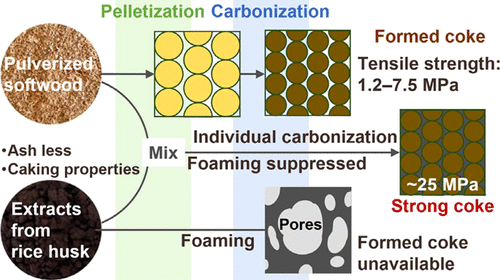
Shogo Okida, Hirotsugu Dohi, Shinji Kudo, Shohei Wada, Takahiro Shishido, Noriyuki Okuyama, Shusaku Asano, Jun-ichiro Hayashi
Energy Fuels, 38 (2024) 16532
DOI:10.1021/acs.energyfuels.4c02892
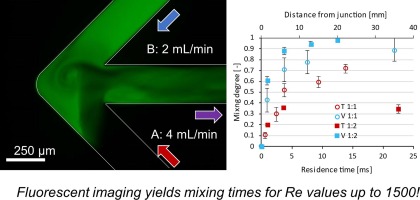
Shusaku Asano, Shinji Kudo, Jun-ichiro Hayashi
Chem Eng J, 489 (2024) 151183
DOI:10.1016/j.cej.2024.151183
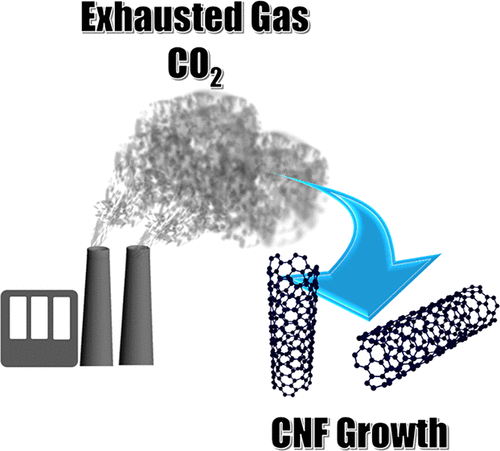
Koji Nakabayashi, Yoshinori Matsuo, Kazuya Isomoto, Kazunari Teshima, Tsubasa Ayukawa, Hiroki Shimanoe, Takashi Mashio, Isao Mochida, Jin Miyawaki, Seong-Ho Yoon
ACS Sustainable Chem Eng, 8 (2020) 3844
DOI:10.1021/acssuschemeng.9b07253

Minghao Li, Keiko Ideta, Koichiro Hata, Hyun-Sig Kil, Kohei Kuroda, Xiazhe Zhai, Koji Nakabayashi, Seong-Ho Yoon, Jin Miyawaki
J Am Chem Soc, 146 (2024) 34401i
DOI:10.1021/jacs.4c10099