Development of a hydrogen supply system based on alkaline water electrolysis with a converted anode reaction

Research outline

We propose a method to improve the efficiency of hydrogen production via alkaline water electrolysis, by adding iodide ions to the electrolyte and converting the anode reaction from oxygen evolution to iodate ion generation. This change in the anodic reaction conversion can, in principle, render electrolysis for hydrogen production more energy efficient and diaphragm-free. Furthermore, the iodate produced at the anode may be regenerated into iodide using industrial waste heat or may serve as a reactant in valuable element recovery processes. This provides a new opportunity for the development of a novel cross-disciplinary system that goes beyond conventional hydrogen production. In this module research, we will conduct demonstration experiments of the proposed water electrolysis and evaluate its potential for industrial applicability.

谷ノ内_概要図(英)

Schematic image of the research concept

Research backgoround

The use of renewable energy sources for water electrolysis enables the production of green hydrogen. Lowering the cost of hydrogen production via water electrolysis has remained a critical challenge in achieving a sustainable hydrogen society.

Research originality

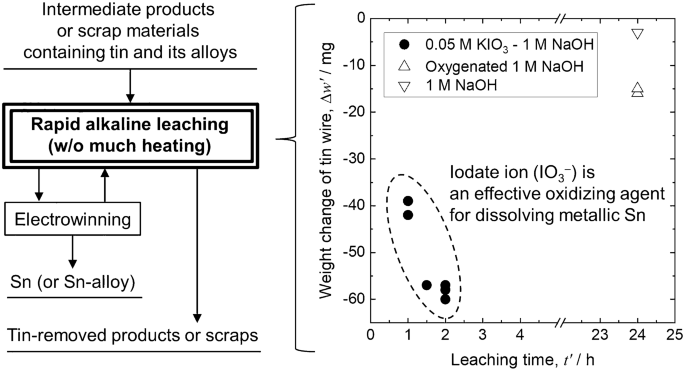
In this study, to improve the efficiency of alkaline water electrolysis, the oxygen evolution reaction at the anode is replaced with an alternative reaction. The species produced at the anode, instead of oxygen, is expected to be regenerated into raw materials for the electrolysis process using industrial waste heat. Furthermore, the anode product may be utilized for extracting valuable metals from secondary resources.

Module members

TANINOUCHI Yuki

Professor

Graduate School of Engineering

Management of module research, design of electrolytic cells and conditions

NAKANO Hiroaki

Professor

Graduate School of Engineering

Analysis of electrode reaction

MATSUMOTO Hiroshige

Professor

International Institute for Carbon-Neutral Energy Research (I2CNER)

Design of electrolytic cells and conditions

TOMISAKI Mai

Assistant professor

International Institute for Carbon-Neutral Energy Research (I2CNER)

Conducting electrolysis experiments

Expected results and outcomes of the collaboration

In this module research, we will conduct experiments to evaluate the feasibility and potential technical issues of the proposed water electrolysis technology. The outcomes are expected to lead to collaboration with entrepreneurs outside the university or even to the founding of a start-up venture.

Representative research papers and achievements

Carbon black / PTFE composite hydrophobic gas diffusion layers for a water-absorbing porous electrolyte electrolysis cell

Y. Terayama, T. Haji, S. Furukawa, M. Nomura, M. Nishihara, S.M. Lyth, Y. Sone, and H. Matsumoto
Int. J. Hydrogen Energy, 43 (2018) 2018-2025.
DOI: 10.1016/j.ijhydene.2017.12.045

Preparation of hydrophobic electrocatalyst layer and inorganic porous electrolyte layer for water absorbing porous electrolyte electrolysis cell

Y. Terayama, S. Furukawa, M. Nomura, T. Haji, M. Nishihara, O. Mendoza, Y. Sone, and H. Matsumoto
Int. J. Hydrogen Energy, 43 (2018) 11903-11912
DOI: 10.1016/j.ijhydene.2018.04.137
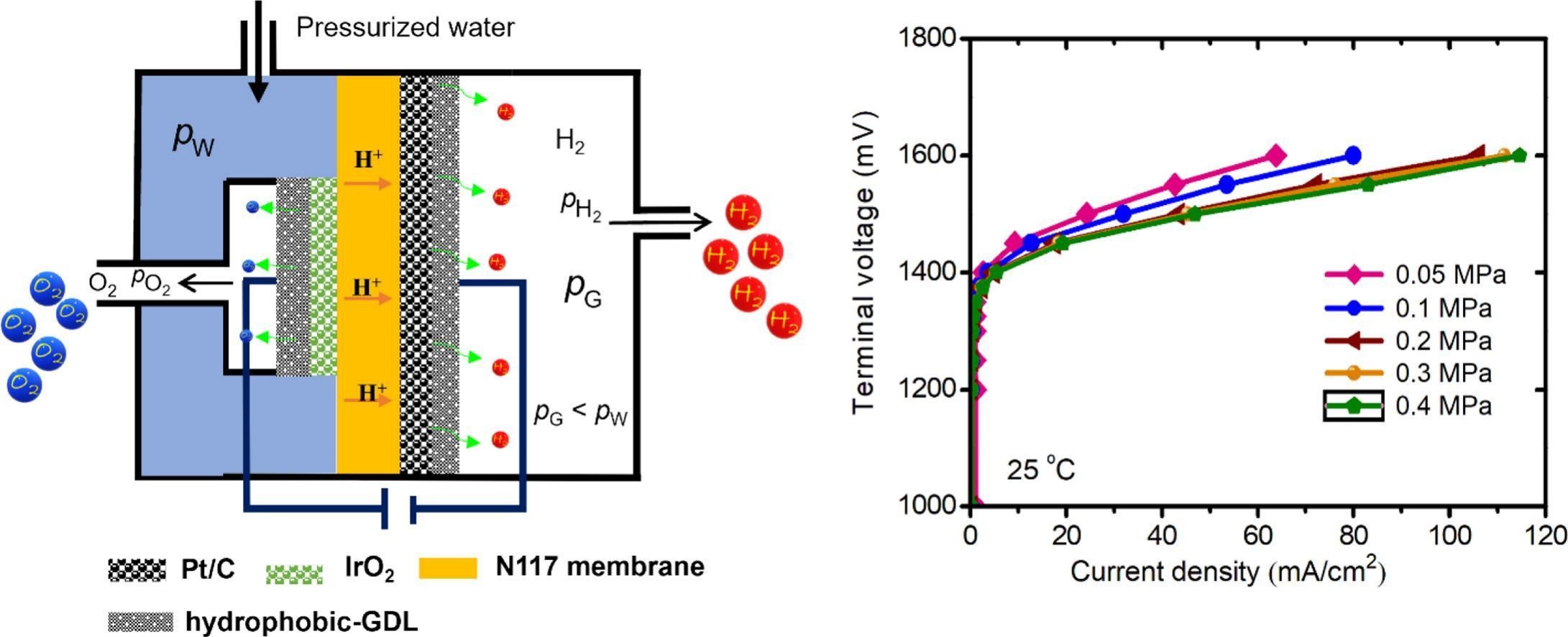
Pressurized water electrolysis using hydrophobic gas diffusion layer with a new electrolyzer cell structure

Vediyappan V., Lai Q., Fujisaki T., Andrews J., Sone Y., Kwati L., Matsumoto H.
Solid State Ionics, 416 (2024) 116678.
DOI: 10.1016/j.ssi.2024.116678